

The Modern Learner
Today’s college students are juggling multiple financial commitments and may have competing priorities that complicate their identity as students. Analyses of data from the National Center for Education Statistics have found that so-called “traditional” students—those who enroll in college full-time immediately after high school, work part-time if at all, and are financially dependent on their parents—comprise a minority of undergraduate learners in recent decades. In the 2011-12 academic year, 74 percent of students had at least one non-traditional characteristic, while nearly a quarter (24 percent) had four or more.
Trellis Strategies’ Fall 2023 Student Financial Wellness Survey (SFWS) provided insight into the experiences of these modern learners.
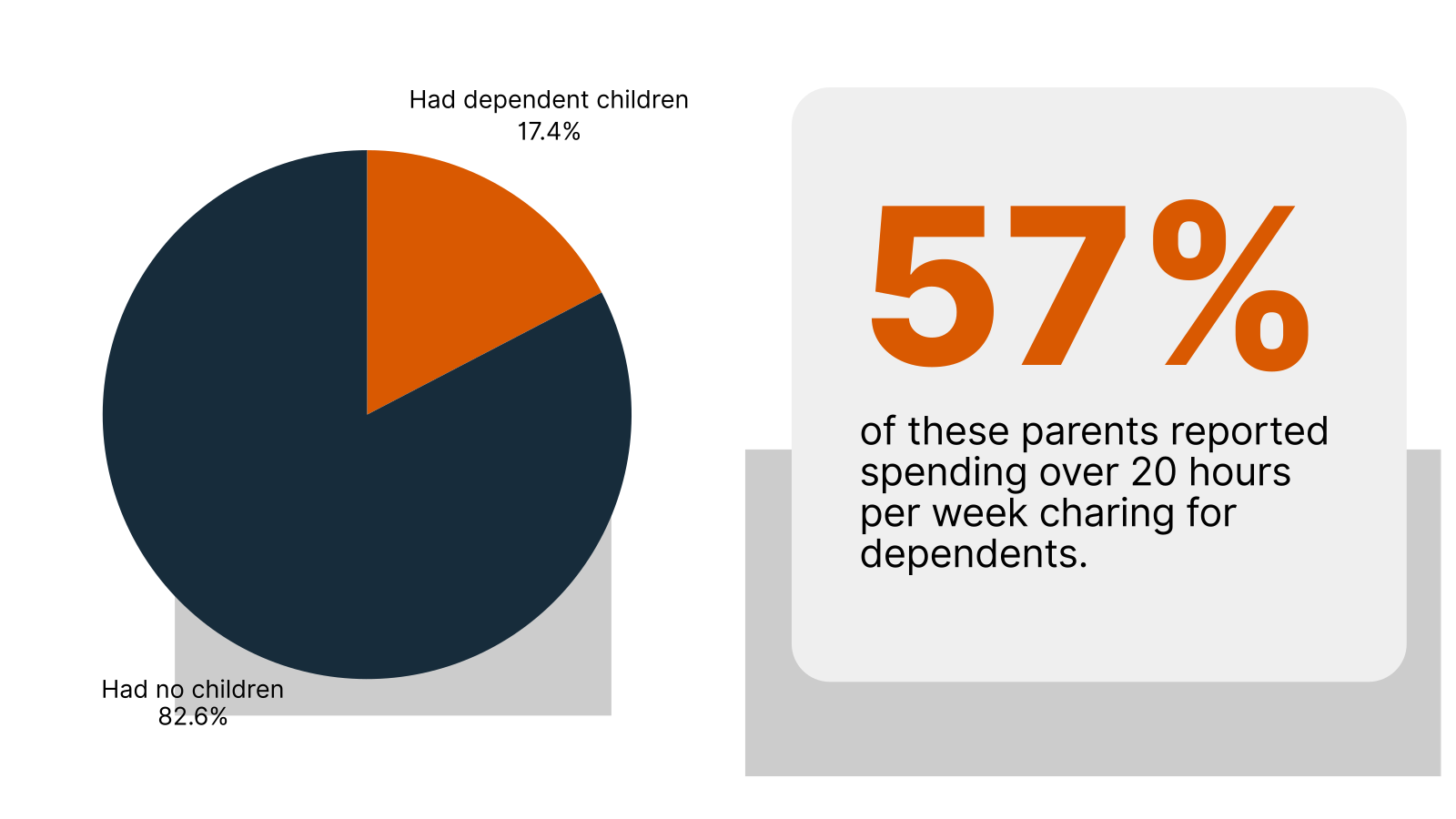
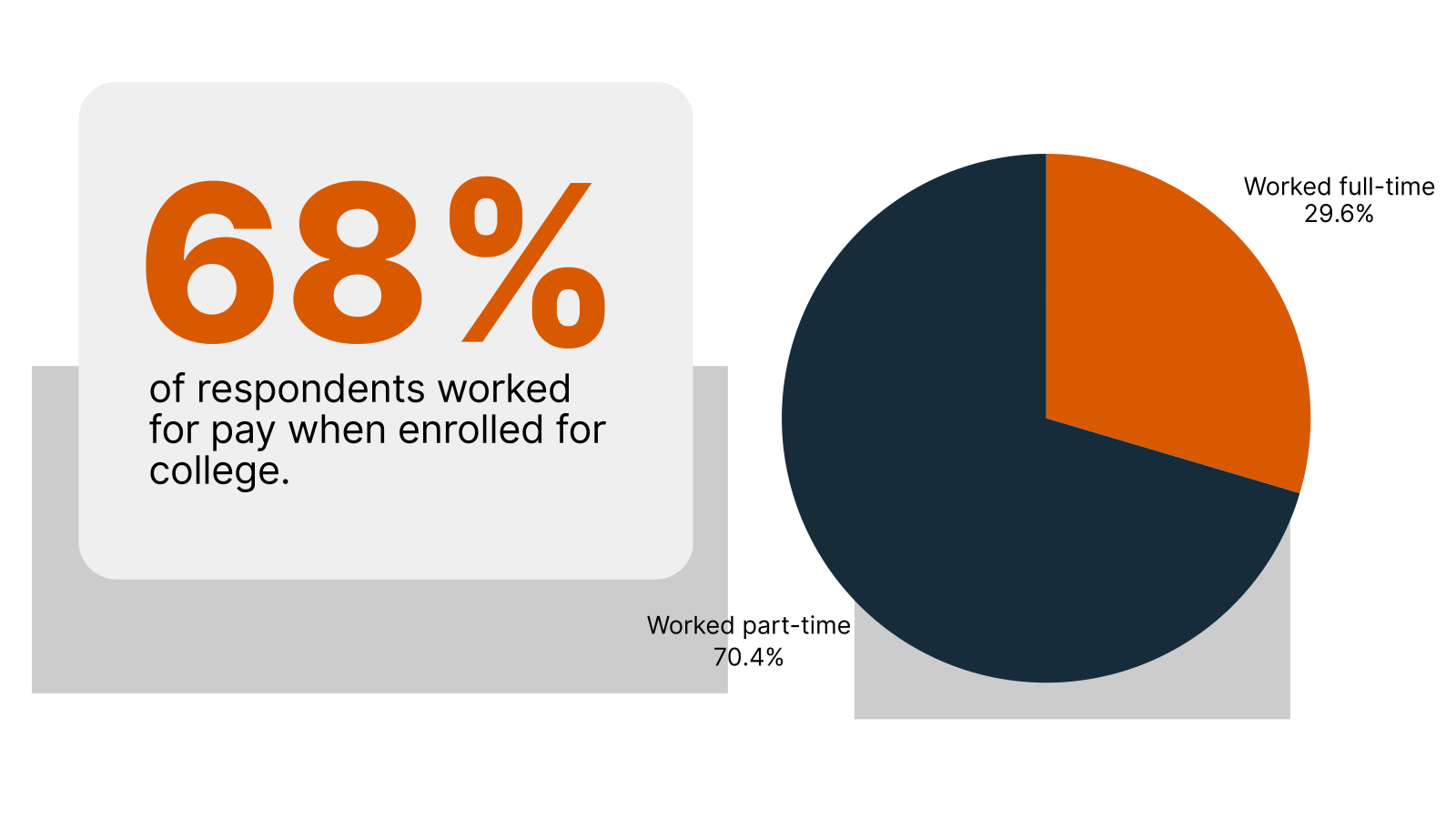
These working learners were asked whether they identified primarily as “a student who works” or “a worker who goes to school”; 38 percent identified as workers first.
Finally, 36 percent of respondents identified as first-generation college students. These learners were more likely to report experiencing financial challenges while in school (80 percent) compared to their continuing-generation peers (67 percent).
Investing in College
Attaining a college degree is associated with higher wages and lower unemployment, and the majority of undergraduates view college as a worthwhile investment in their future. In the SFWS, students aged 25 or older, first-generation students, parents, and “workers who go to school” typically shared this belief.

However, students’ perceptions of familial support were less uniform across learners. While most learners reported that their family believes in the value of a college degree, older learners, first-generation students, parents, and workers were all less likely to agree with this statement compared to their more “traditional” peers.

Financial Priorities
Although the modern learner values college, they also face other financial priorities. Nearly half of all SFWS respondents (46 percent) agreed that it was important to support their family financially while in college, with dramatic differences among student groups. For example, 85 percent of parents and 71 percent of students over age 25 placed importance on providing for their family.

As learners juggle commitments to work and family, these competing priorities may challenge their ability to persist to graduation. The financial and social realities of the modern learner are of key importance to administrators, student support staff, and policymakers in understanding how students view the return on investment of a college education.
May Helena Plumb is a Research Analyst at Trellis Strategies, where she specializes in telling students’ stories through qualitative research. She holds an M.A. and a Ph.D. in Linguistics from The University of Texas at Austin.
FAQ for the Modern Learner in Higher Education
Who is considered a “modern learner” in higher education?
The term “modern learner” refers to today’s diverse college students. Many of these students balance work, family, and financial responsibiliteis alongside their education. They are considered “nontraditional” students. Most undergradutaes now have
How common are nontraditional college students today?
Nontraditional students now make up the majority of undergraduates in the United States. Data from the National Center for Education Statistics shows that in the 2011–2012 academic year, 74% of students had at least one nontraditional characteristic, and nearly one in four (24%) had four or more. This trend has continued in recent years, reshaping how colleges support and engage learners.
Why do many students see themselves as “workers who go to school”?
For many modern learners, work is essential to affording college and supporting family responsibilities. The SFWS found that over a third of students identify primarily as workers rather than students, reflecting how employment often shapes their schedules, academic choices, and sense of identity. This shift underscores the need for flexible class options, financial aid, and institutional policies that accommodate working adults.
Do modern learners still believe college is worth the investment?
Yes — most students still view college as a worthwhile investment in their future. The SFWS found that adult learners, first-generation students, parents, and working learners largely believe that a degree leads to higher wages and more stable employment. However, perceptions of family support vary: these groups were less likely to report that their families share that belief compared to more traditional students.
How do competing priorities affect college persistence and graduation?
Working long hours, caring for dependents, and managing financial stress can make it difficult for students to persist through graduation. These pressures can reduce time for coursework, limit campus engagement, and increase the risk of dropping out. Understanding these realities helps administrators and policymakers create support systems — like flexible scheduling, emergency aid, and child care access — that improve retention among nontraditional students.